


 Children 0-16
 Youth 17-24
 Students
 Accessibility
 Luggage
 Animals
 Disruptions
 Tram
Tram
Plusbus
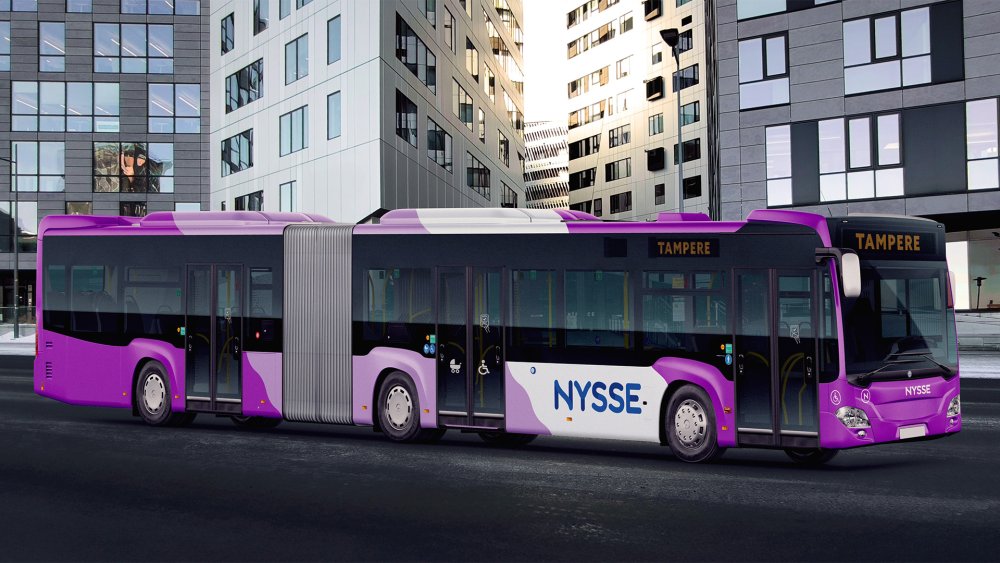
Plusbuses – a new form of public transport
Plusbuses offer customer-oriented service that combines the smoothness of a tram with the flexibility of a bus. It is not just about new electric articulated buses, but a complete service package. Superbuses run frequently and reliably, can be boarded from any door, and offer hassle-free travel without the need to check timetables. The aim is to provide growing areas with the smoothest, fastest, and easiest public transport service possible.
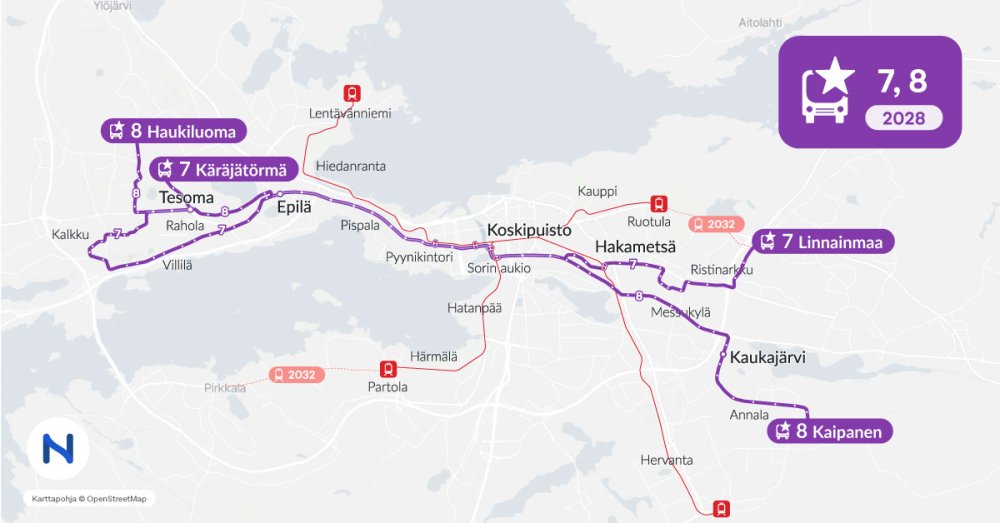
The first plusbuses will start operating in 2028 on routes
- 7 Käräjätörmä–Tesoma–Kalkku–City center–Hakametsä–Linnainmaa
- 8 Haukiluoma–Tesoma–City center–Kaukajärvi–Annala, Kaipanen.
What should I be called?
The naming contest has ended. We received an incredible number of suggestions - over 5.000 in total!
Thank you for your participation.
Tram like service
Reliable and accurate: Buses run at high frequency, so there is no need to check timetables. You can board from any door, which speeds up travel.
Easy to use: All doors function as entry and exit. You can pay for your journey in the same way as on other Nysse vehicles, and familiar ticket devices can be found at every door.
Modern and comfortable: Buses are new, stylish, and run on electricity – making them environmentally friendly and quiet.
Service above all: The bus is more than just a long articulated bus. The aim is to provide a smooth, pleasant, and easily accessible public transport experience.
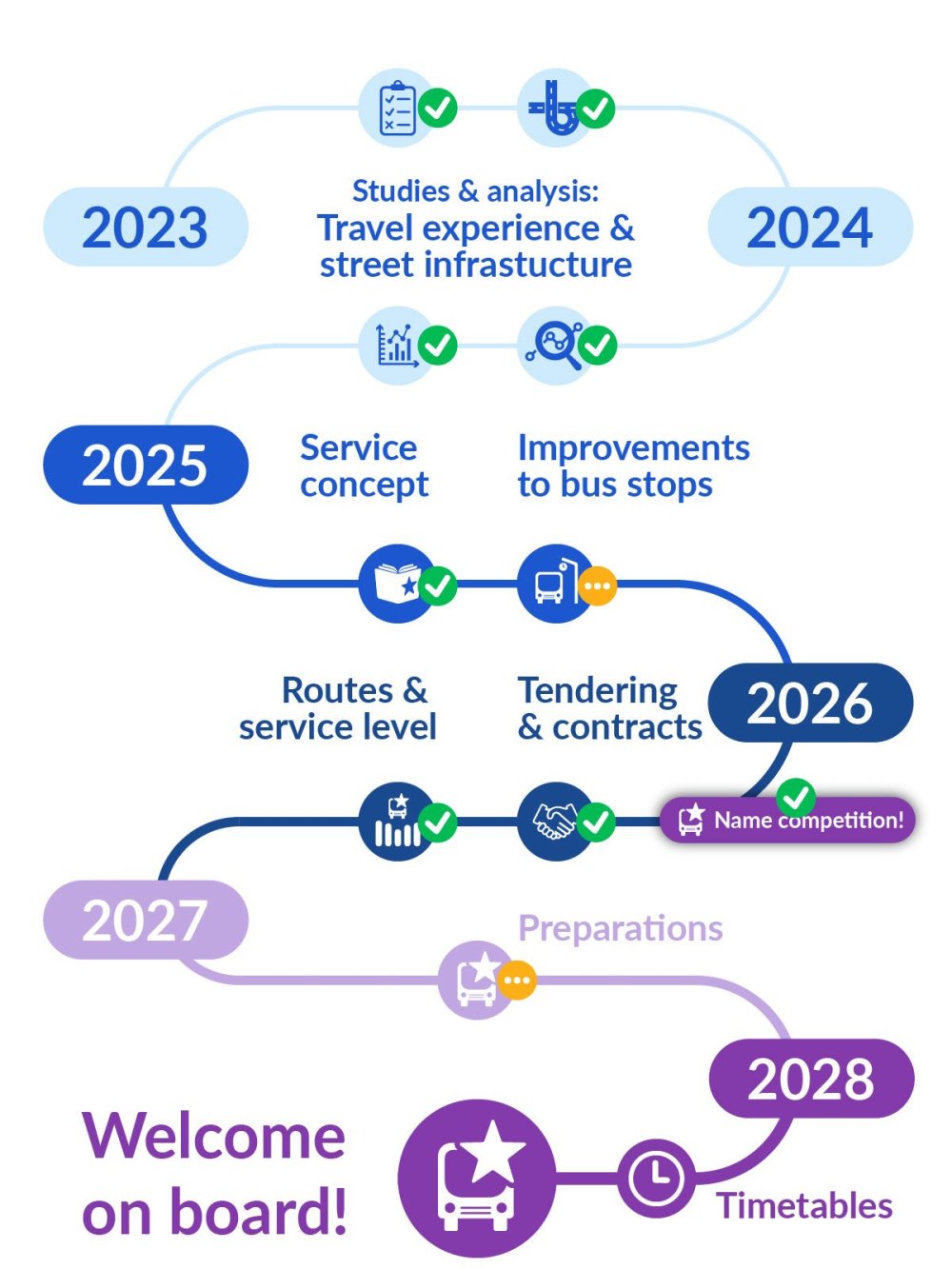
The journey of the plusbuses
In 2023, Nysse began designing a new type of service by testing travel experience and street infrastructure. The tests examined passenger flows and the suitability of the routes for longer vehicles than those currently in use.
In 2024, Nysse focused on analysing the test results. The findings were used to develop the service concept and to identify the improvement needs of bus stops.
In 2025, the Tampere City Region Public Transport Committee approved the service concept and cost estimate. Bus stop improvement work began.
In 2026, the Public Transport Committee will make several decisions related to the services of the lines:
- March: Routes, preliminary service level and start date for the lines.
- April: Launch of the tendering process for operating line 7.
- September–October: Procurement decision for the operation of line 7.
Operating agreement for line 8 with Tampere City Transport Ltd.
The aim is for the upgraded lines 7 and 8 to begin service in August 2028.
In the 2030s, the service is planned to be expanded to line 4. The exact schedule will be decided later.
Frequently asked questions
The service will not affect ticket prices.
Plusbuses are new, stylish articulated buses. Buses are painted in dark and light purple and white. The Nysse logo is displayed on the side.
Plusbuses serve areas with high passenger volumes but where the tram network is not being expanded.
Line 7
Käräjätörmä – Tesoma – Kalkunvuori – Kalkku – Mustavuori – Villilä – Ala-Rahola – Kaarila – Epilä – Pispala – Pyynikinrinne – Keskustori – Koskipuisto – Sorin aukio – Yliopisto – Kalevanharju – Kalevanrinne – Hakametsä – Uusikylä – Janka – Ristinarkku – Linnainmaa
Line 8
Haukiluoma – Ikuri – Tesoma – Ristimäki (Mediapolis) – Epilänharju (Tohlopinranta) – Epilä – Pispala – Pyynikinrinne – Keskustori – Koskipuisto – Sorin aukio – Yliopisto – Kalevanharju – Vuohenoja – Aakkula – Messukylä – Hankkio – Kaukajärvi – Annala – Kaipanen
Plusbuses are 18.5-meter fully electric articulated buses. The buses can be recognized by their purple color.
Stops on lines 7 and 8 do not differ significantly from other Nysse stops. However, they are being improved so that
- passengers can board and exit the bus as easily as possible from all doors
- drivers can stop at the stop and continue their journey smoothly
- maintenance crews can keep the stop clean and well maintained with minimal effort.
Improvement measures include, for example, extending stops or converting a bus bay into an onstreet stop. Attention is also paid to the safety of the waiting area—for instance, bicycle traffic is directed behind the stop whenever possible.
It is true that plusbus transport will be cheaper than tram transport. However, Nysse always evaluates the overall functionality of transport services. The aim is to select transport options that are suitable for the passenger numbers and needs of each area and route. Plusbus transport is being planned for areas where rail transport is not going to be introduced.
 More information