


 Children 0-16
 Youth 17-24
 Students
 Accessibility
 Luggage
 Animals
 Disruptions
 Tram
Tram
Robot bus
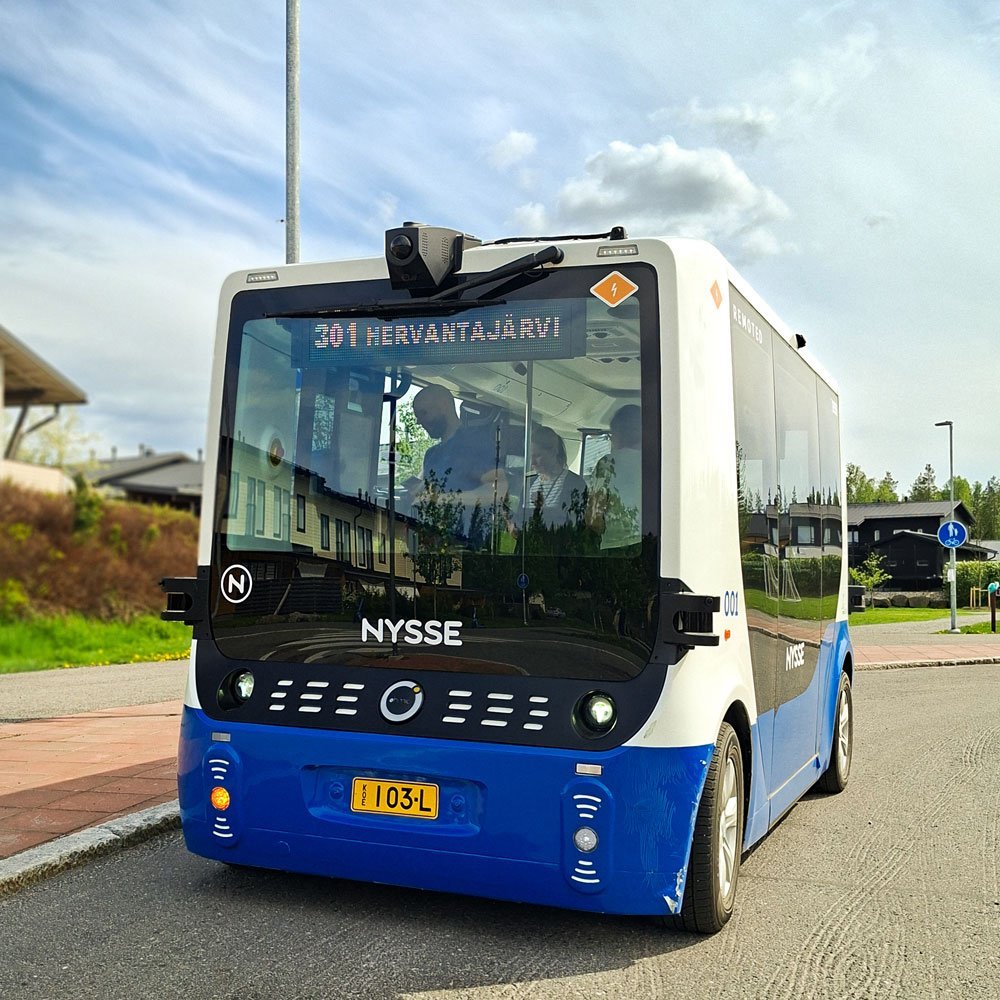
The robot bus is an electric shuttle bus that operates autonomously, without a driver, along a predetermined route.
In Tampere, a robot bus has been operating between the Lintuhytti residential area and the Hervantajärvi tram stop since November 2025. During the trial phase, a safety driver was on board, but since 24 June 2026, the route have been monitored remotely.
The robot bus is a flexible option for areas where there is no need for larger vehicles. It can carry up to 12 passengers, and the passenger compartment also has space for prams. The robot bus is not accessible.
Timetables
The robot bus operates with route number 301. Timetables can be found in the Nysse journey planner and the schedule service.
The route has a transfer connection to tram route 3 at the Hervantajärvi stop.
Tickets and payment
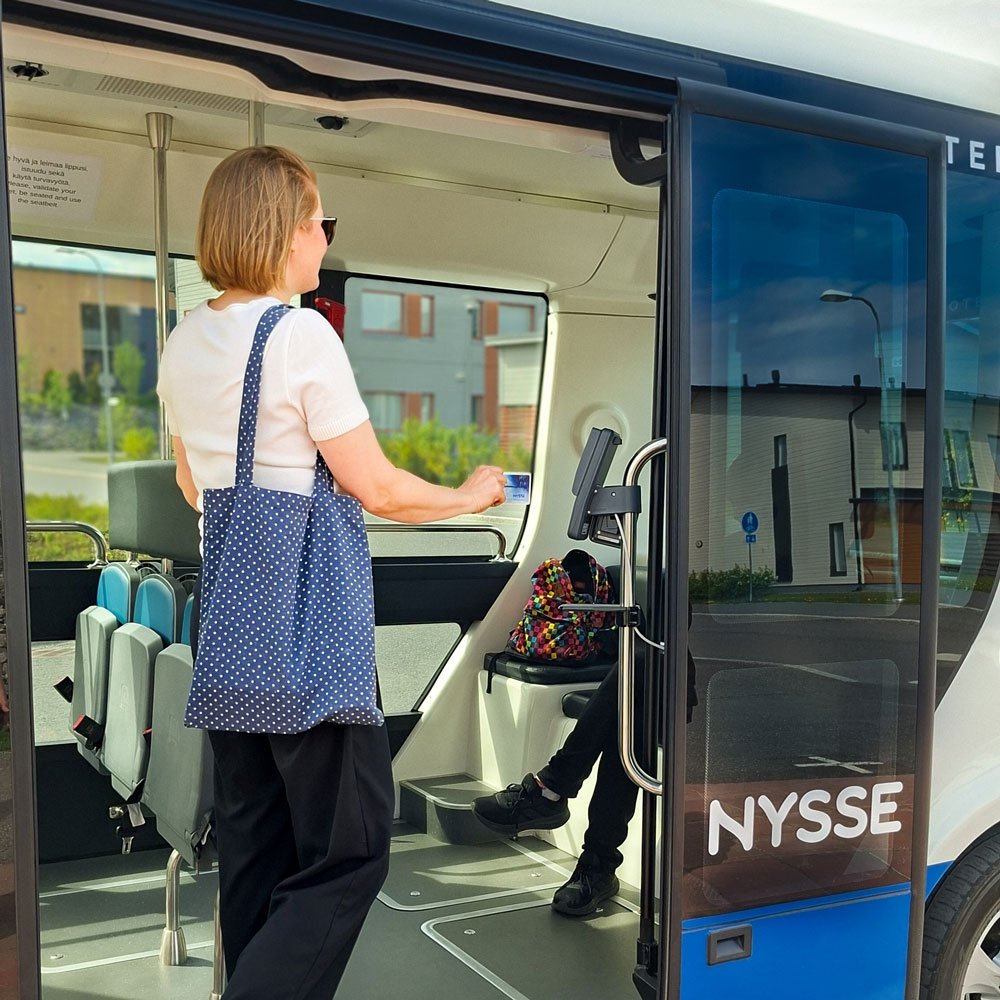
You can pay for your trip with a Nysse ticket. The robot bus is equipped with a ticket machine similar to those found on trams and regular buses.
Ticket-checking can be carried out, and payment is monitored through video surveillance.
Safety
Travelling on the robot bus is safe. The vehicle recognises its environment, avoids obstacles, and stops as needed. Trips are continuously monitored remotely, and a connection to the remote monitoring centre is open at all times.
Possible disruptions are announced via Nysse's communication channels.
Frequently asked questions on the robot bus
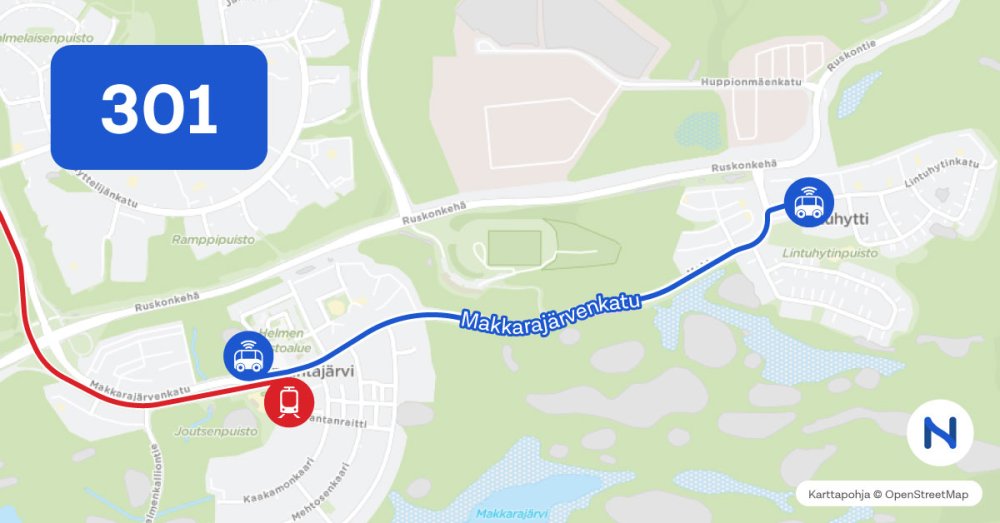
The robot bus currently only operates from Lintuhytti to the Hervantajärvi tram stop. There are no other stops on this route
The robot bus sticks to the schedule as closely as possible and does not usually wait for late passengers. Furthermore, the remote monitoring centre has a limited view of the area around stops, so passengers arriving at the stops may not always be noticed in time. Because of this, we recommend arriving at the stop well in advance to ensure you can board the bus.
The robot bus does not depart until all passengers have paid for their trip and fastened their seatbelts.
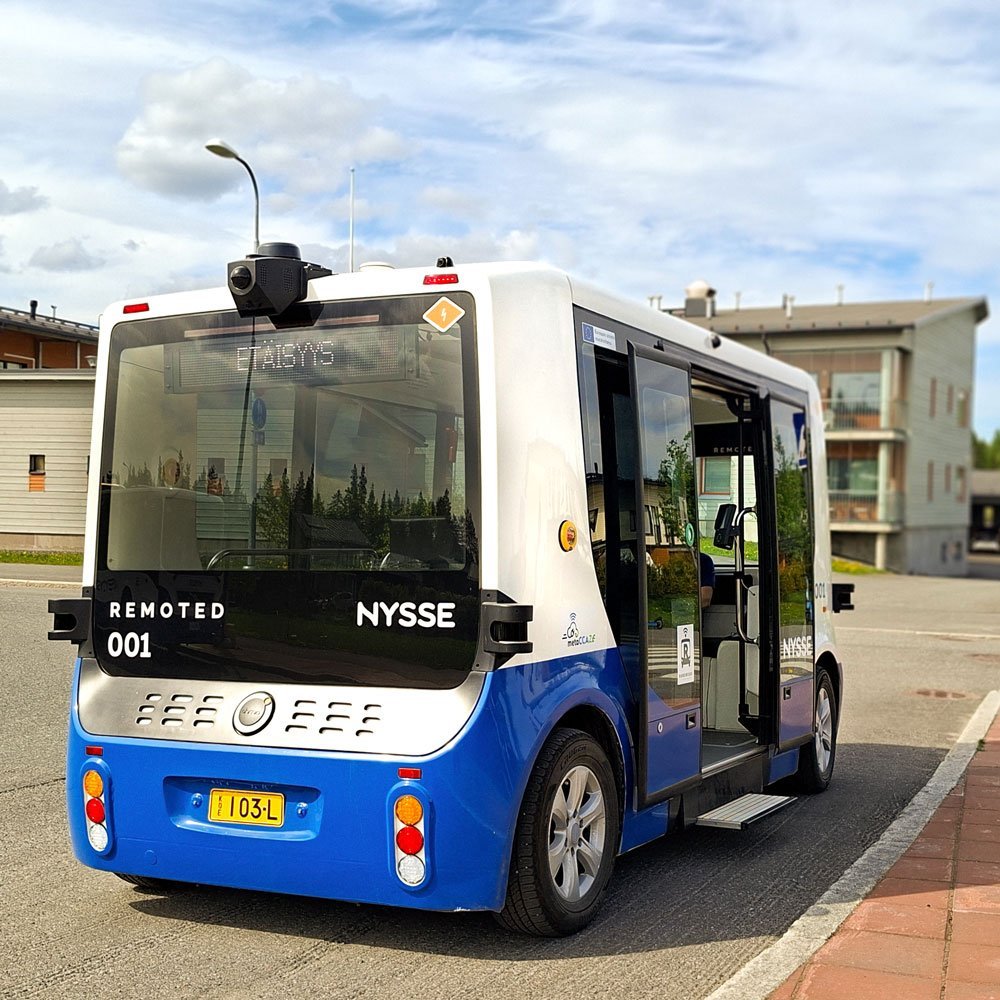
The robot bus does not possess a wheelchair ramp, and the space on board is insufficient for aids such as wheelchairs to ensure a safe journey. Robot buses are still in the development phase, and in current models, space utilisation and structural design limit accessibility.
Yes, the robot bus is designed as a safe vehicle. It continuously observes its environment and can both identify and avoid obstacles in its path.
The cabin also possesses a direct audiovisual link to the remote monitoring centre, so that staff can monitor the situation and direct passengers if needed.
To ensure safety on board, customers must remain seated and wear seatbelts for the entirety of the trip – standing room is not provided on robot buses.
Safety is further enhanced by an emergency stop button that will quickly stop the vehicle if needed.
The remote monitoring centre maintains a continuous audiovisual connection to the robot bus' passenger compartment. You can contact the staff by speaking clearly.
There is also an emergency phone in the passenger compartment that you can use to contact the staff if the audio connection is not working.
The robot bus' top speed is 25 km/h. The actual speed depends on the section of the route, weather conditions, and other road users.
The trip between Hervantajärvi and Lintuhytti lasts about 8 minutes.
 More information